To estimate how long a book will take, time a short sample from that book and use the pace for the pages remaining. Divide the estimated minutes by the time you want to read each day. The result is a starting schedule that you can revise after a few sessions.
This calculator uses pages, so it works best within the same edition and layout. A dense textbook page and a page of dialogue are different amounts of reading. A general words-per-minute average would hide that difference, and it would not include your pauses for notes.
Take a representative sample
Choose a section that resembles most of what remains. Record how many pages you complete and the elapsed minutes, including the kinds of pauses you expect to take. If you are studying, include looking at diagrams or making notes when those are part of your normal reading session.
Avoid using a table of contents, a mostly blank chapter ending or a section you already know as the sample. You can time another section later and compare the pace. There is no need to turn every reading session into a measurement exercise.
For an ebook, page numbers may change with display settings. Keep the same device and layout while making a pages-based estimate. If the app supplies locations or percentages instead, use a separate record with consistent units rather than mixing them with paper pages.
Calculate the time remaining
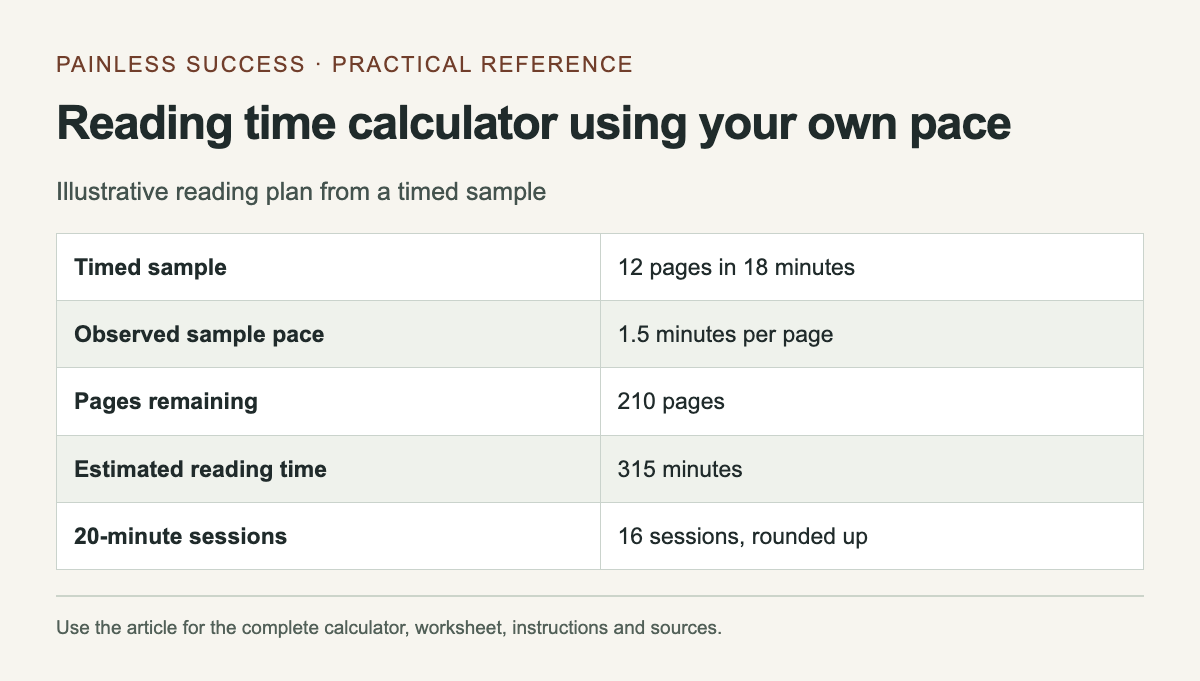
Suppose an illustrative sample takes 18 minutes for 12 pages. That is 1.5 minutes per page. If 210 pages remain, the estimate is 315 minutes, or five hours and 15 minutes. At 20 minutes per day, you need 16 reading sessions after rounding up.
The final session may be shorter than 20 minutes. The calculator rounds up because a partial remaining session still needs a place in your plan. It reports sessions, which equal days only if you read once on every planned reading day.
The formula is: remaining pages × sample minutes ÷ sample pages. Divide that result by minutes per session and round up to get the session count. These calculations estimate time from your inputs; they do not measure comprehension.
Put the sessions in a real calendar
If you plan to read four days per week, 16 sessions occupy four weeks. If you read every other day, they stretch across roughly a month. Count the actual reading opportunities before promising yourself a finish date.
A deadline can help you decide whether to shorten the notes, read a required section first or allocate more time. It does not require rushing a book you wanted to enjoy. When you control the deadline, changing it is one reasonable option.
Keep different kinds of reading separate
Studying a chapter for an assessment may include exercises, recall practice and rereading. Estimate those activities separately if they are outside your timed sample. Otherwise a reading-only calculation can make the whole assignment appear smaller than it is.
For a reference book, finishing every page may not be your goal. List the chapters or questions you need and enter only those pages. For a novel, you may prefer to ignore the calculator once you know whether the book fits your current plans.
Adjust after the first few sessions
If the next section is much denser, sample that section and rerun the calculation. Keep the original estimate in a note if you want to understand why it changed. A change in pace can come from the material, your available attention or what you are doing while reading.
Choose a comfortable stopping point near the end of a session and mark the next place to begin. If tracking starts interrupting the reading itself, keep just the page marker and next planned session. The estimate has done its job once it helps you make room for the book.