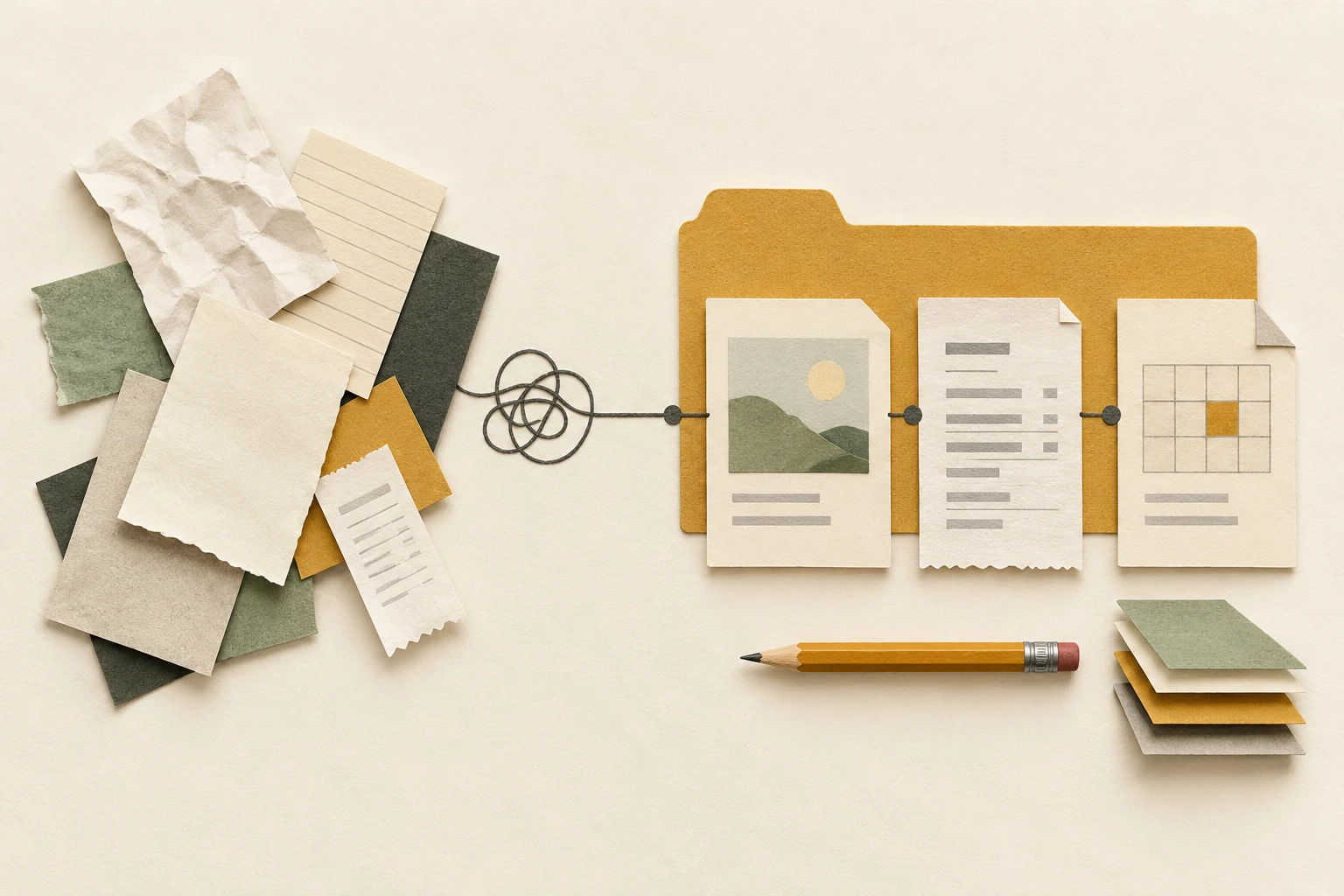
Save a small selection of completed work that you are allowed to retain. Label each example by its purpose and note the feature that helped. Use it as a reference for structure while checking all facts, permissions and requirements of the new task.
A folder full of drafts can make it hard to see what you have already learned to complete. When a similar task arrives, you start from a blank page again.
Keep a small selection of finished work that you are allowed to retain. Label it by the task it answers and remove confidential information where necessary. A completed request, outline or practice exercise can show you the structure you used.
Note what worked
Add a sentence about the useful feature, such as a clear introduction or a manageable length. Avoid treating one finished example as a universal template. A new task may need different details or a different approach.
Review the folder occasionally and remove examples that no longer reflect your current practice. Keep it small enough to browse quickly. When using an example, check the facts and requirements of the new task carefully rather than copying old names or assumptions. The folder can help you recognise a workable shape while leaving the new work responsive to its actual purpose.
Reusing the shape of a completed request
An illustrative exampleConsider a clear request you wrote for a previous project. You save a permitted, anonymised version in a small examples folder under a label describing its purpose. A note explains that the useful feature is the early request followed by a short reason. When a new task arrives, you open the example to see that structure, then write the new message with its actual recipient, timing and constraints. You check that no old names or promises remain. An outdated example that relies on a process you no longer use is removed from the folder. The collection stays small enough to browse without becoming another archive that requires its own search routine.
Keep references you can use safely
Tick the steps as you work through them.
0 of 5 steps checked
When examples encourage copying the wrong details
Read the example for its organisation before drafting the new version. Write the new facts from a separate note, then check names, deadlines and assumptions against the current task. A completed example may depend on circumstances that no longer apply. Add a limitation note if it is still useful, or remove it if the limitation outweighs the benefit. Keep drafts and finished references in separate locations so a search does not present an unfinished attempt as an approved pattern. Label the version so you can distinguish it from current work.
Label one useful example
Your notes stay in this page. Copy them before leaving; they are not saved or sent to us.