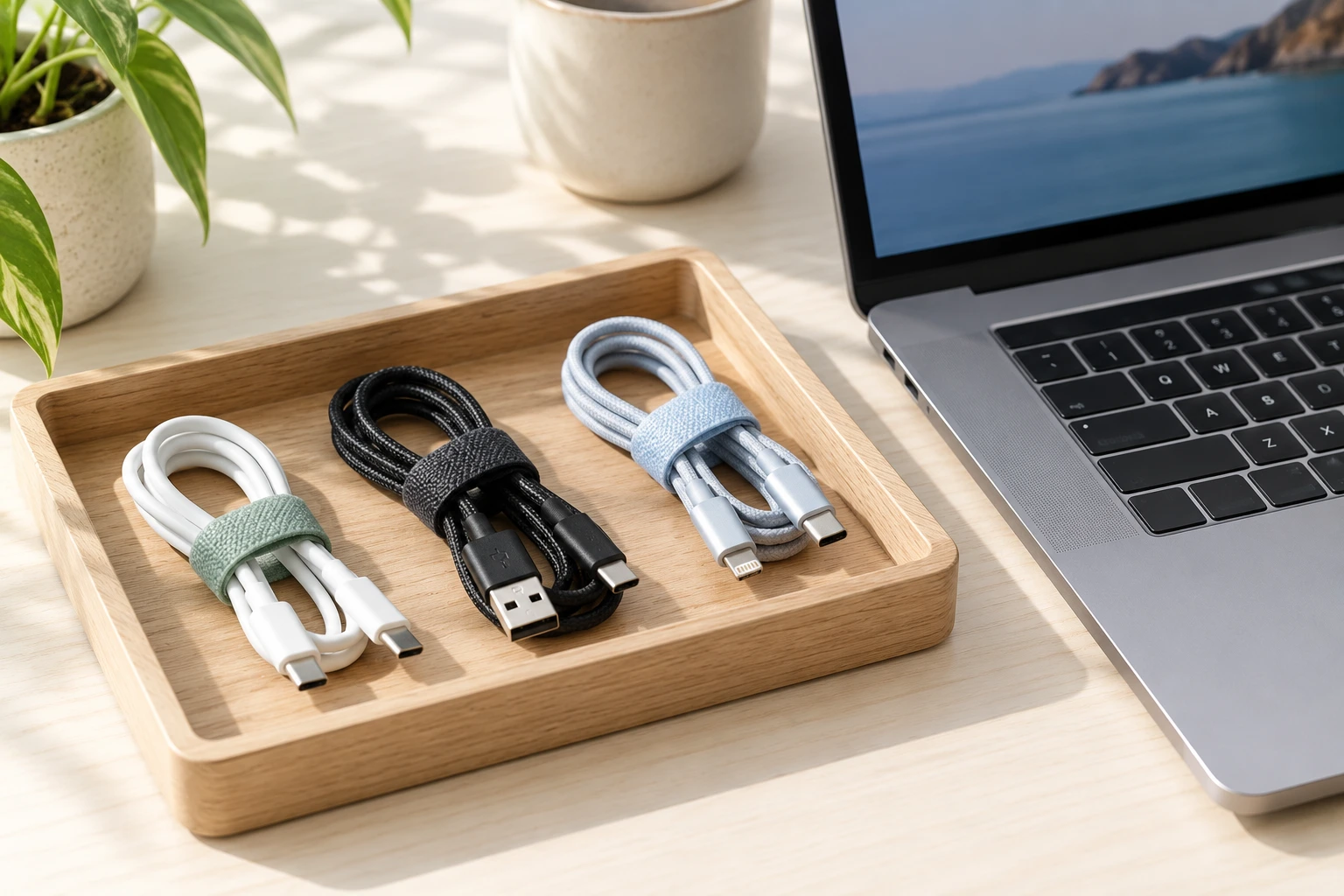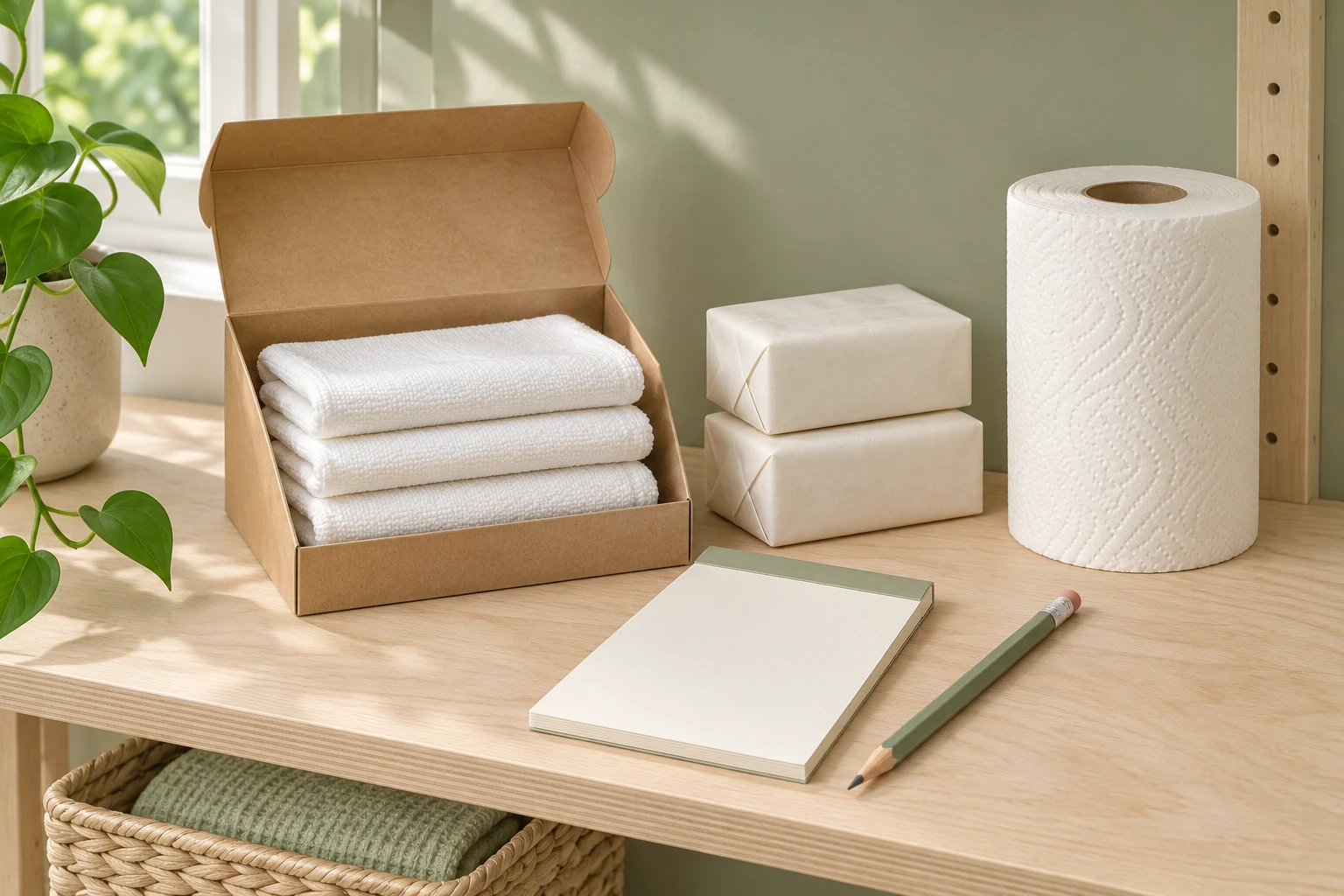
A useful household stocktake tells you what to check before the next shop. In the filled example below, soap needs one more spare bar, dishwasher tablets already meet the chosen spare-box target, and the battery count stays unresolved until a second drawer is checked. The printable sheet keeps those different states visible.
I would start with four or five regularly replaced items in one part of the home. Counting every cupboard at once makes the sheet harder to maintain. Expand it only if the smaller list prevents the duplicate purchases you actually encounter. For rarely used products, a location note may be more useful than a standing spare target.
You need a pen, the storage locations you intend to check, and a few minutes to inspect them. An AI assistant is optional: it can turn typed notes into a consistent draft, but you can use the sheet directly. This workflow does not require connecting a shopping account or uploading photographs of your home.
Print the A4 kit · Print the US Letter kit · Download the prompt. Each kit has a filled practice page, a blank working page and the household essentials checklist; your browser can save all three as PDF.
A basic household essentials checklist
Use this as a starting list for an ordinary home. Tick an item after checking it, then note whether you have enough, need to replace it, or can skip it. The boxes on this page are temporary; print the checklist to keep your decisions.
I would first cover daily washing, food preparation, cleaning and a few basic tools. Buy replacements for an actual gap. A household without a dishwasher needs no dishwasher tablets, and reusable cloths may remove the need to keep paper towels. Spare quantities should fit your use and storage space.
| Item to check | What to verify |
|---|---|
| Check the bathroom and any spare storage. | |
| Count spare bars or refills separately from the dispenser in use. | |
| Match the people who live here; check condition and spare stock. | |
| Keep usable towels; add only the products each person actually uses. | |
| A reusable cloth can cover many wiping tasks. | |
| Check that containers have matching lids. | |
| Record the size; skip liners where your bin setup does not use them. | |
| List the foods you regularly cook and check dates and storage space. | |
| Choose for your actual surfaces and follow the product label. | |
| Check condition before adding replacements. | |
| Choose what suits your floors; check bags or filters if needed. | |
| Use the method specified for your flooring. | |
| Check the product you use and count unopened spares separately. | |
| Add pegs or hangers if your setup needs them. | |
| Check that it works; note the required battery type or charging lead. | |
| Check what you already own before buying a set. | |
| Match the connectors; keep damaged items out of use. | |
| Only for a dishwasher; follow its instructions for the products required. | |
| Record exact types; avoid buying assorted spares without a matching use. | |
| Add the specific items used in your household; cross out irrelevant categories. |
These are everyday household basics. Keep any emergency supplies and first-aid kit on a separate list so they do not get mixed into the ordinary restocking routine. For the stocktake below, copy only the consumables you want to track; reusable tools need an occasional condition check rather than a spare-stock target.
1. Count in units you can verify
Write the item and its variant before counting: unscented soap, AA batteries, or 30-litre bin liners. Keep different sizes separate. Choose a count unit you can inspect reliably, such as unopened bars, boxes or rolls. Put the item currently in use in a separate column. “One open box” is not a measured number of tablets.
Next, write the location and what you have not checked. An empty cupboard gives you a confirmed zero for that cupboard. An unopened drawer gives you an unknown. That distinction matters when you decide whether to buy something. Add the date so another household member can tell whether the count is still current.
2. Give AI a bounded sorting task
Copy the prompt below to try the complete example. Replace the notes with your own only after seeing how the unknowns are handled. All quantities and spare targets here are invented for practice. They are not a recommended stock level for your household.
OpenAI’s prompting guidance recommends clear instructions and enough context, followed by review and refinement. Here, the count units, source IDs and rules for unknowns give the assistant concrete constraints.
Turn the following practice notes into a household consumables stocktake. Draft text only: do not shop, create orders, send messages or set reminders. Use only the notes. Keep item variants separate. Count unopened spare units separately from an open item in use. Do not estimate what remains in an open container. Mark an unchecked location as unknown, never zero. Preserve source IDs. Return: item, count unit, confirmed unopened spares, open item, unchecked location, stated spare target, next action. Targets are my chosen limits, not recommendations from you. Put uncertain items in a check-first list. Do not convert packs to pieces without an explicit pack size.
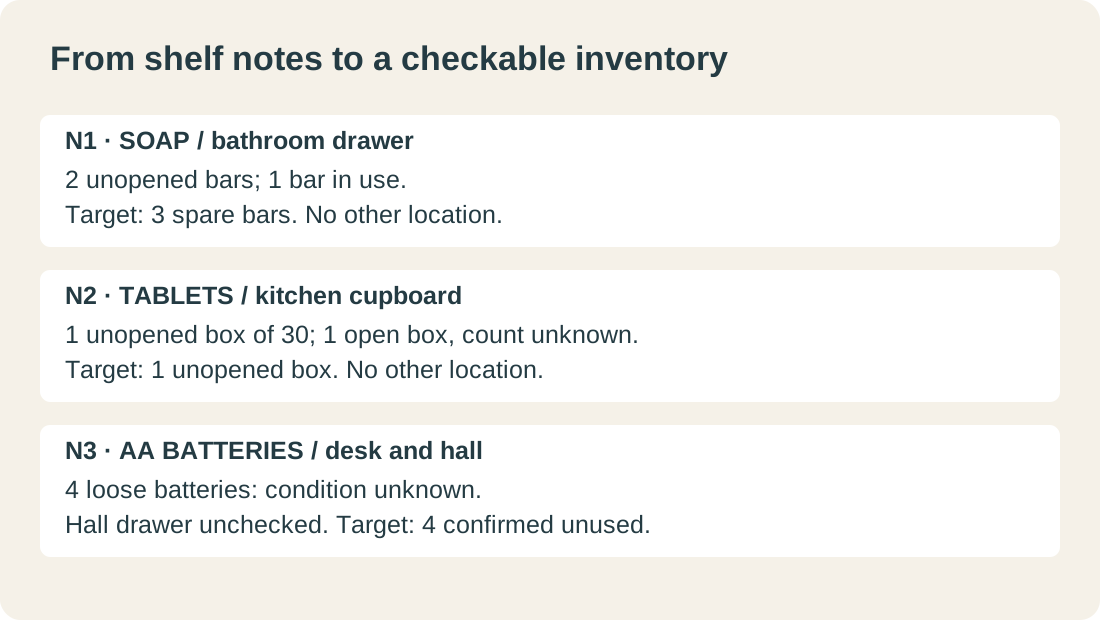
N1: Unscented soap. Bathroom drawer: 2 unopened bars, 1 bar in use. No other storage. Chosen spare target: 3 bars.
N2: Dishwasher tablets. Kitchen cupboard: 1 unopened box of 30 tablets, 1 open box with remaining count unknown. No other storage. Chosen spare target: 1 unopened box.
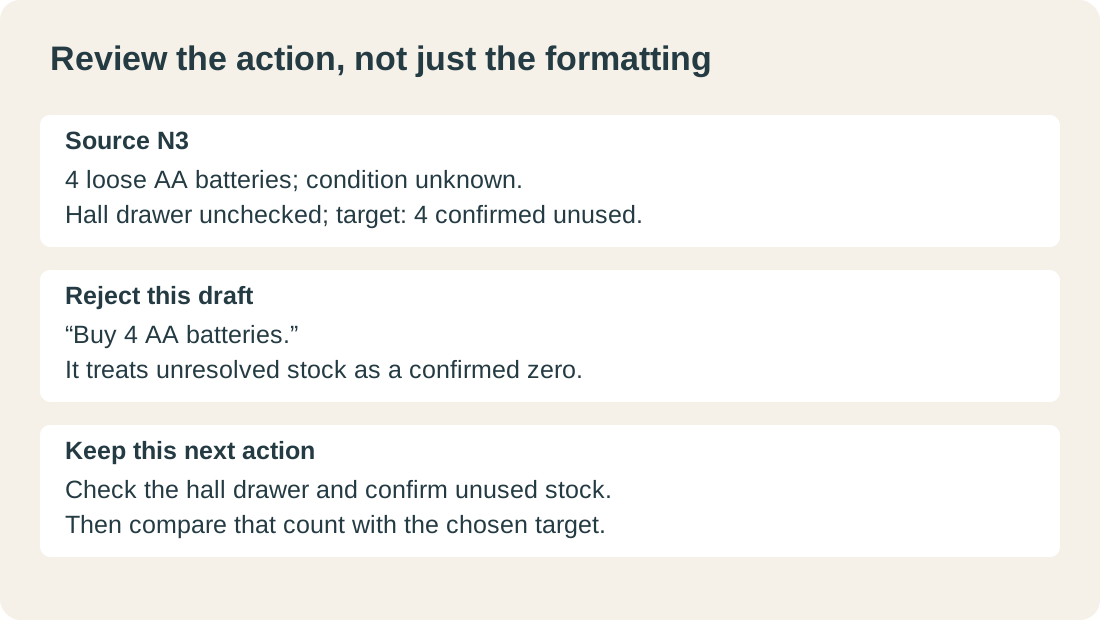
N3: AA batteries. Desk: 4 loose batteries, condition unknown. Hall drawer not checked. Chosen spare target: 4 confirmed unused batteries.
N4: Bin liners, 30-litre size. Utility cupboard: 0 unopened rolls; 1 open roll, remaining count unknown. No other storage. Chosen spare target: 1 unopened roll. Pack size at the shop has not been checked.
N5: Do not mark any item purchased or any uncertain count verified.
After the table, list the facts I must verify before shopping. Explain any pack conversion you make; otherwise leave the purchasing quantity unresolved.
3. Check the draft against the filled example
This is a prepared reference answer, not a transcript of a model test. Your assistant may use a different format; compare the meaning of each row with the original note.
| Item | Count unit | Confirmed spares | Open / uncertain | Unchecked | Spare target | Next action |
|---|---|---|---|---|---|---|
| Unscented soap | Bars | 2 | 1 in use | None | 3 bars | Shortlist 1 bar |
| Dishwasher tablets | Unopened boxes | 1 × 30 | Count unknown | None | 1 box | No spare-box gap |
| AA batteries | Unused batteries | Unknown | 4 loose: condition unknown | Hall drawer | 4 unused | Check first |
| 30-litre bin liners | Unopened rolls | 0 | Count unknown | None | 1 roll | Shortlist 1 roll; check pack |
Soap has two unopened bars against a chosen target of three. The bar already in use remains separate. Tablets already meet the one-unopened-box target; the unknown amount in the open box does not need to be guessed. Batteries cannot be assessed yet because condition and location are unresolved. Bin liners have a spare-roll gap, but a shop may sell several rolls in a pack, so the purchase quantity still needs a packaging check.
Read the AI output with the notes beside it. Reject a battery row that says “buy four” or a tablet row that turns the open box into another full box. If the answer merged two variants, split them before using the list. A neat table can conceal an incorrect count just as easily as a messy note.
4. Resolve checks, then make the purchase list
- Inspect each location marked unchecked. Record the result with its unit and date.
- Keep uncertain condition separate. For batteries, only count items you can identify as unused toward the unused-spare target; do not infer condition from appearance.
- Compare confirmed spares with your chosen target. Leave the target blank if you have not decided whether you want a spare.
- Check the actual pack size before turning a gap into a purchase quantity. If a two-roll pack exceeds your one-roll target, decide whether that extra stock is worth storing.
- Print the checked working page or copy only the confirmed purchase candidates to your usual list. Tick “bought” after the purchase, then record the revised count when it is put away.
I would keep unresolved items off the purchase list until the missing cupboard check is done. If you are already shopping and cannot check, make that uncertainty explicit and decide whether to defer the item. The worksheet should expose that choice rather than quietly turning it into a confident quantity.
5. Keep the next count short
Store the sheet near the items, or keep one agreed copy where the household can find it. Update it when a spare moves into use and after restocking. If several people buy the same supplies, agree which list is current before duplicating it in an app. An assistant cannot know that someone used a spare unless you provide an updated observation.
When the sheet becomes stale, recount the small set of items instead of asking AI to reconstruct consumption from memory. Keep household addresses, account details and unrelated personal notes out of the prompt. For a broader checking method, use the source-note review worksheet. For a separate equipment inventory, see the cable inventory guide.