A 45-minute meeting with six people uses 4.5 person-hours during the call. If each person also prepares for ten minutes, the combined time is 5.5 hours. Counting that time can help you choose a format, attendance list and frequency that fit the decision.
The calculator measures time, not financial cost or meeting quality. A useful meeting may justify substantial preparation. A short meeting can still leave everyone unclear about what happens next. Use the number alongside the result the meeting is supposed to produce.
Count the people who actually attend
Enter expected participants, including the organizer if they attend. Count observers too; listening still uses their time. If attendance changes from week to week, use a typical count and make a second estimate for the larger group.
Do not treat the total as a judgment about any person's value. The same hour can have different implications for different roles and schedules. The calculation simply adds the time allocated by the people involved.
Add preparation without counting it twice
Enter preparation minutes per person when everyone does roughly the same amount. This might include reading a short proposal or checking figures before the discussion. The calculator adds that amount to the meeting duration for each participant.
If preparation varies, calculate the meeting time first with preparation set to zero, then add each person's preparation separately. For example, six people in a 30-minute call use three hours. One organizer spending 40 minutes and five attendees spending five minutes each add another 65 minutes, for a total of four hours and five minutes.
Follow-up work can be counted in a separate note. A task created by a useful decision is not automatically a meeting overhead. Be clear about whether you are measuring coordination time or the project work that follows.
Compare a recurring series
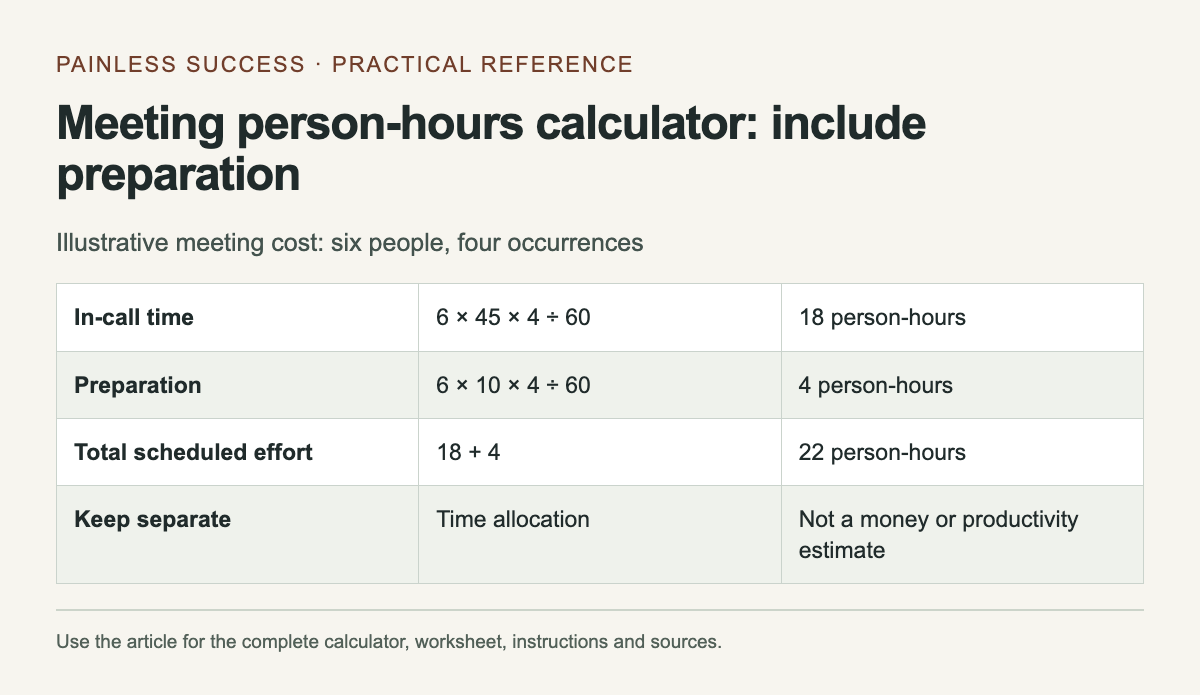
For an illustrative series of six participants, 45 minutes, ten minutes of preparation each and four occurrences, the total is 22 person-hours. Reducing the meeting to 30 minutes while keeping the other inputs gives 16 person-hours. The difference is six hours across the series.
That is a difference in scheduled time, not a promise of six hours of additional productive output. The shorter format may need a better agenda or written update. If work simply moves into longer preparation, include that change in the comparison.
Use the actual number of occurrences in the period. A weekly meeting is not always held exactly four times in a calendar month. Holidays, cancellations and five-week patterns can change the count.
Ask who needs the discussion
Separate people who must decide, people whose information is needed and people who only need the result. Some people may contribute asynchronously or attend one part of the meeting. Check with them before removing an invitation that they rely on for context.
Write the decision in the invitation. "Choose the release date after reviewing the two unresolved issues" is more actionable than "project sync." Share the materials early enough for the preparation you requested.
Review the meeting after a trial
Try the revised format for a stated number of occurrences. Record whether the needed decision happened, whether participants had enough context and whether new coordination problems appeared. A shorter slot that repeatedly overruns needs another adjustment.
End each meeting with a concise note naming the decision, action owners and any due dates that were actually agreed. If no live discussion is needed next time, cancel that occurrence and send the relevant update. Keep recurring meetings because they serve a current purpose, and give each one a date for reconsideration.