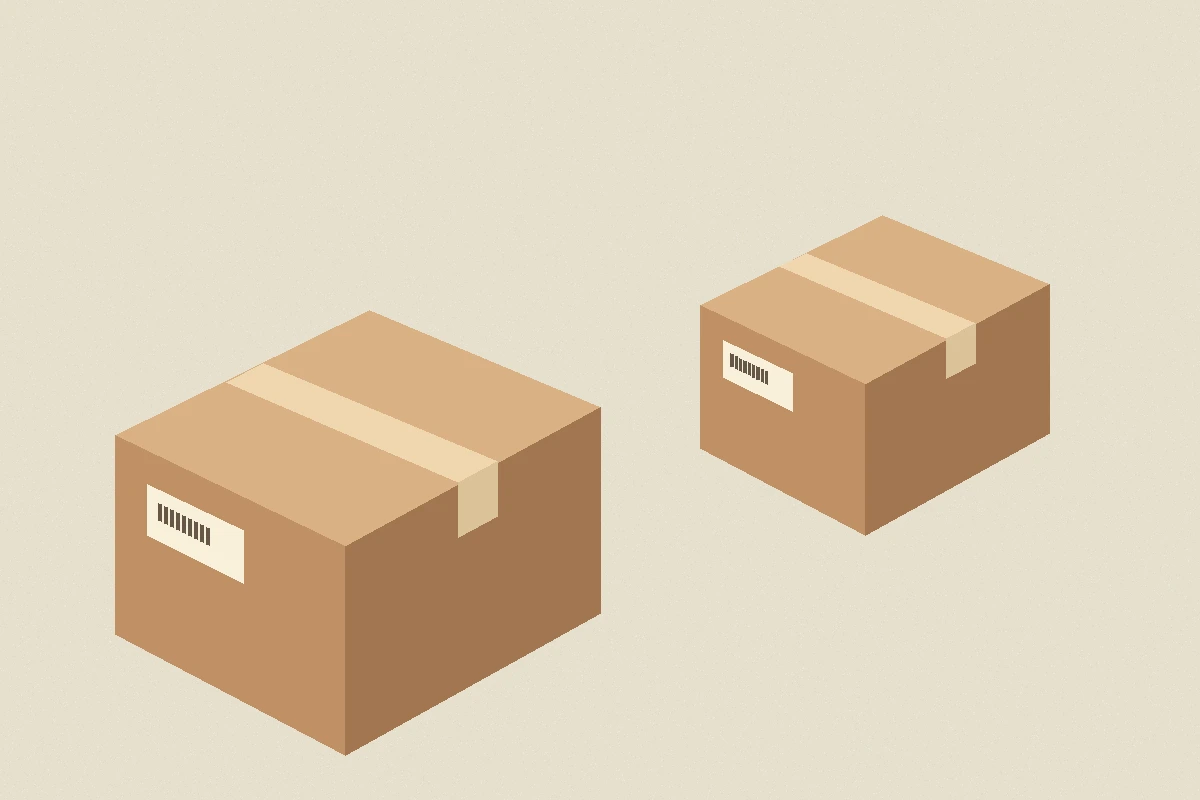
The first box is on your kitchen table. Your order page says “delivered,” yet one mug is missing. Before you report a shortage, find out which parcel that status describes. A single sheet of paper can tell you what you have in hand, what the shop says is coming separately, and what you still need to ask about.
Start with the order confirmation
Gather the itemized order, any dispatch messages, the packing slip and the contents of the box. Give the order a short nickname. Keep addresses, account details and full tracking numbers off a sheet you plan to photograph for an AI assistant. A pencil is useful because the outstanding quantity changes as each box arrives.
- Write one row per item. Copy the quantity and the variant from the confirmation. If you ordered a blue mug and a green mug, give each color its own row. Group identical mugs together. Check whether the shop describes a pair as one set before counting individual pieces.
- Give each parcel a letter. Mark the box in front of you A. Use B for a second parcel if a separate dispatch message identifies it. An order confirmation listing three items tells you what you bought. By itself it tells you nothing about how many boxes the shop sent.
- Open A and count. Put each item beside its row. Record what you actually find in the column for A, then check the packing material for small loose parts. If the slip lists an item you cannot find, keep that discrepancy in the margin so you can describe it accurately.
- Calculate what remains. Subtract the physically received quantity from the ordered quantity, item by item. Write the contents promised for B in a separate note. Leave the outstanding count in place until you inspect that parcel.
Worked example with two mugs and a notebook
Suppose your order confirmation lists two identical mugs and a notebook. You open A and take out one mug and the notebook. A dispatch email lists a mug for B. Here is the sheet at the end of the first delivery.
| Item | Ordered | Found in A | Still to verify |
|---|---|---|---|
| Mug | 2 | 1 | 1 |
| Notebook | 1 | 1 | 0 |
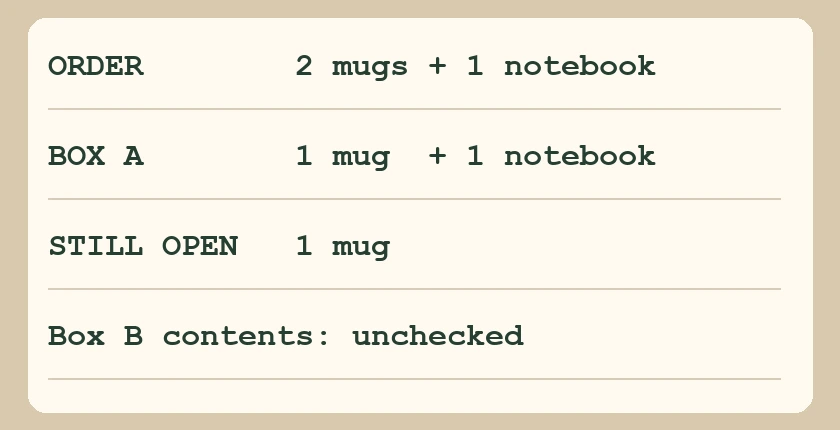
I would leave this sheet with the packing slip until the count reaches zero. For an order shared by two people, keep a single copy where either person can record a delivery. Otherwise the second person may open B, put the mug away and leave you chasing an item already in the cupboard.
Check the count with an AI assistant
Type the item names and counts from your sheet into the prompt below. Replace the example with your own anonymized entries. The assistant can compare the numbers you give it. You still need to look inside the box and consult the shop for updates to its dispatch record.
Reconcile this practice order using only my notes. Ordered: two mugs and one notebook. Box A opened: one mug and one notebook. Dispatch note for B: one mug. Box B has not been opened. For each item, list ordered, physically received, and still to verify. Keep expected contents separate. Flag any contradiction or missing quantity. What one observation would close the open row?
Copy the plain-text prompt. In the example, a correct answer leaves one mug open and closes the notebook row. If the answer counts both mugs as received, ask which observation accounts for the second one. The dispatch note alone cannot answer that question.
Close the sheet when the next box arrives
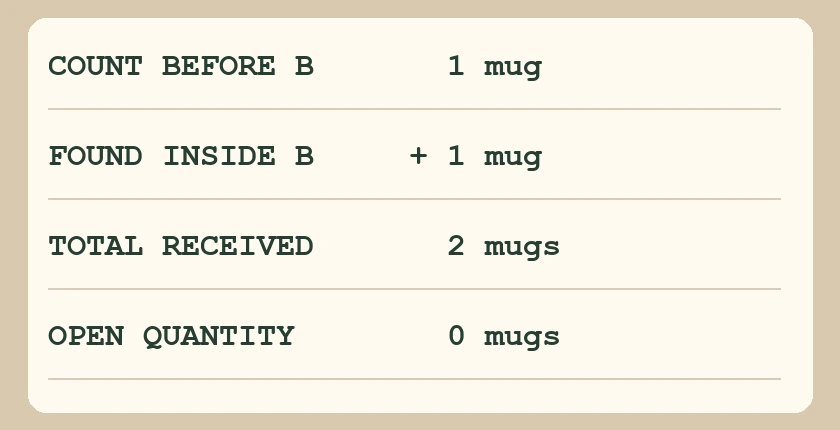
If B contains one mug, add it to the received column, date the entry and close the order. If B contains a second notebook instead, record that extra notebook on its own row. It does nothing to settle the missing mug. Keep the slip and use the shop’s order contact option to describe exactly which items arrived in each parcel.
If there is no separate dispatch notice, write “second parcel unconfirmed” and check the order details before assuming another box is coming. If the shop arranges a replacement, give it a separate parcel letter and keep the original ordered quantity. Should both parcels arrive later, the sheet will show the extra item clearly.
Print the worked example and a blank sheet in A4 or US Letter. Choose Save as PDF in the print dialog to keep a digital copy. For related decisions, see how to compare delivery options and the parcel return packing checklist.