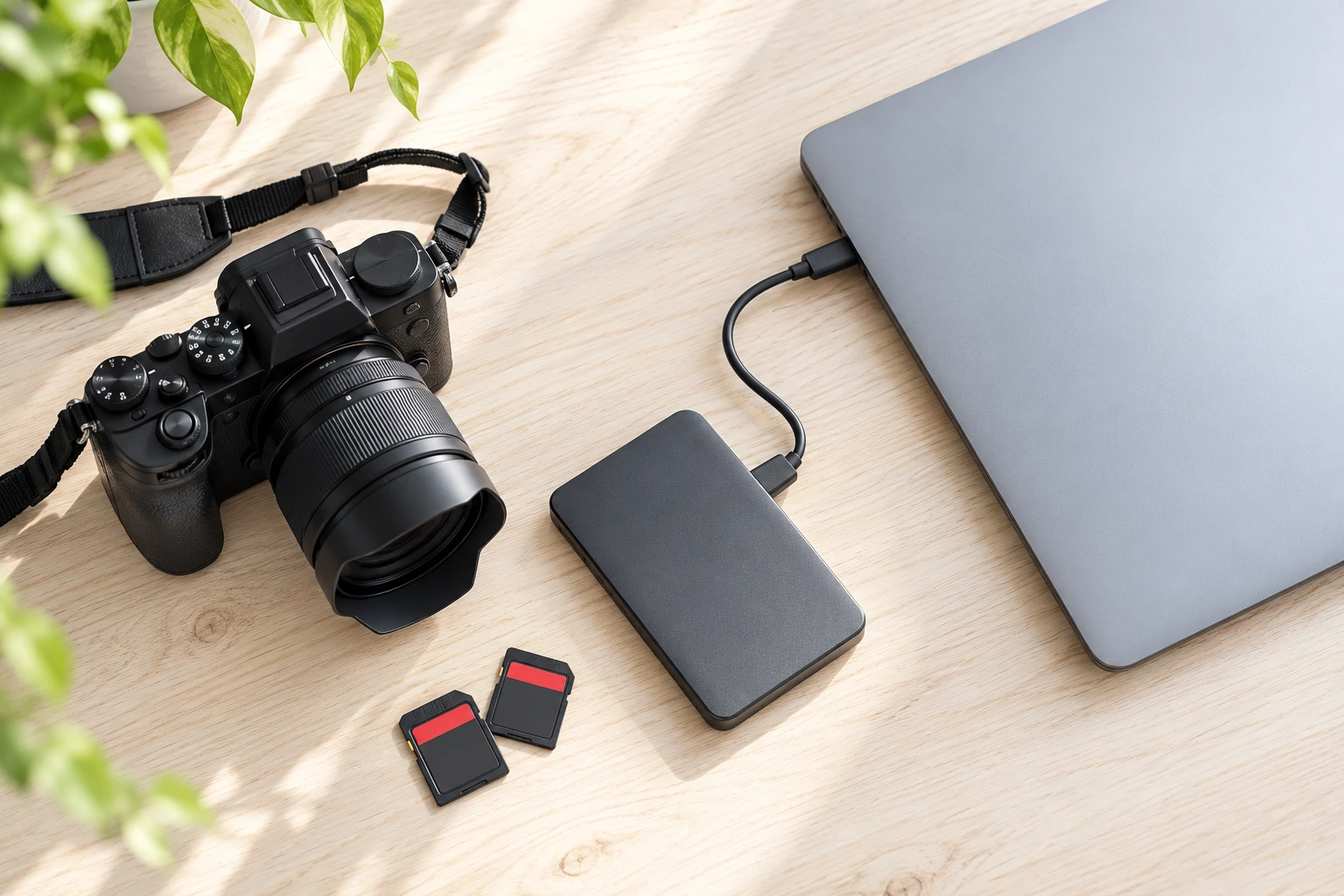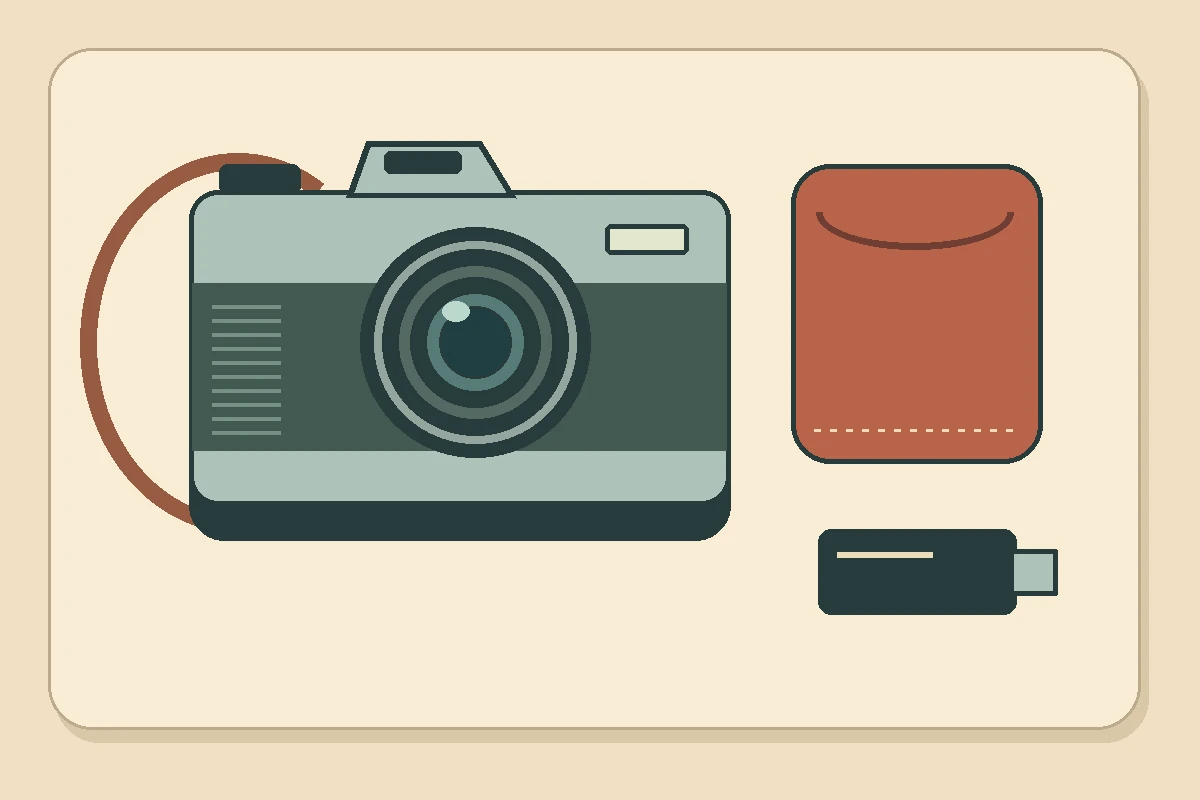
The camera is back on the shelf. Its little USB reader is still with Jo. If your lending log has one checkbox for “camera kit,” ticking it loses the only detail you still need. Give the loose pieces their own lines on the same slip.
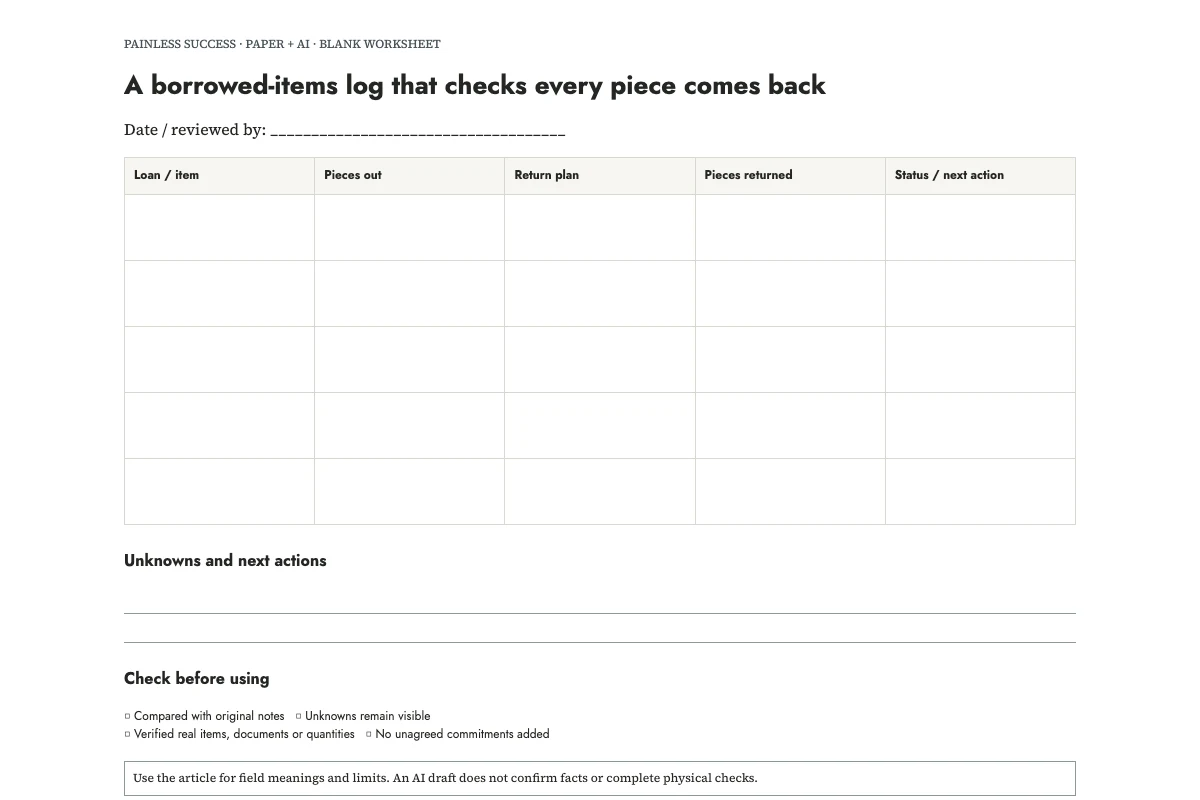
Print the A4 lending log · Print the US Letter lending log. Each file includes the filled example and a blank sheet. Choose Save as PDF in your browser to keep a copy.
Write the slip while the pieces are together
- Lay out the things that will leave the house. Use a name you can recognize later, such as “USB card reader” or “blue canvas sleeve.”
- Write the borrower’s name or initials once at the top. Add the date lent. Fill the return-date field only if you have agreed on one.
- If the borrower is unsure when they will finish, agree on a day to check in. Put that in its own field so a friendly follow-up does not turn into an overdue notice.
Record a partial return
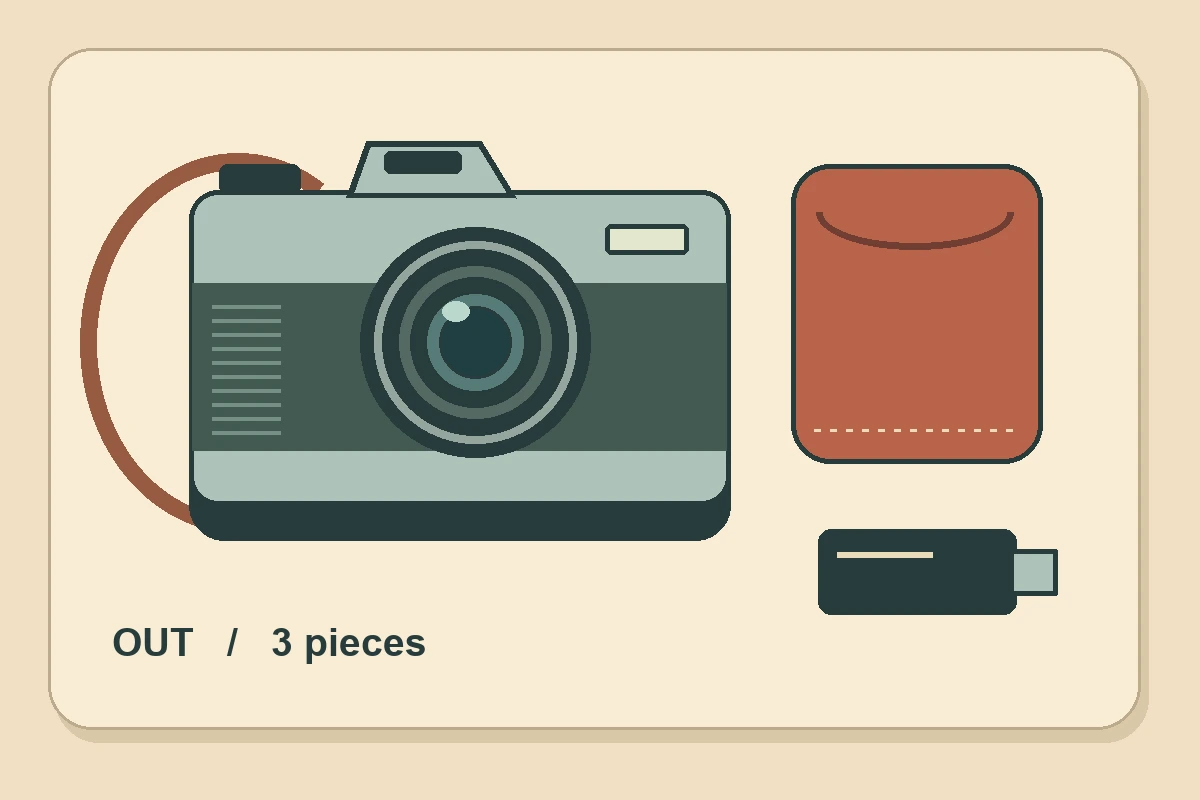
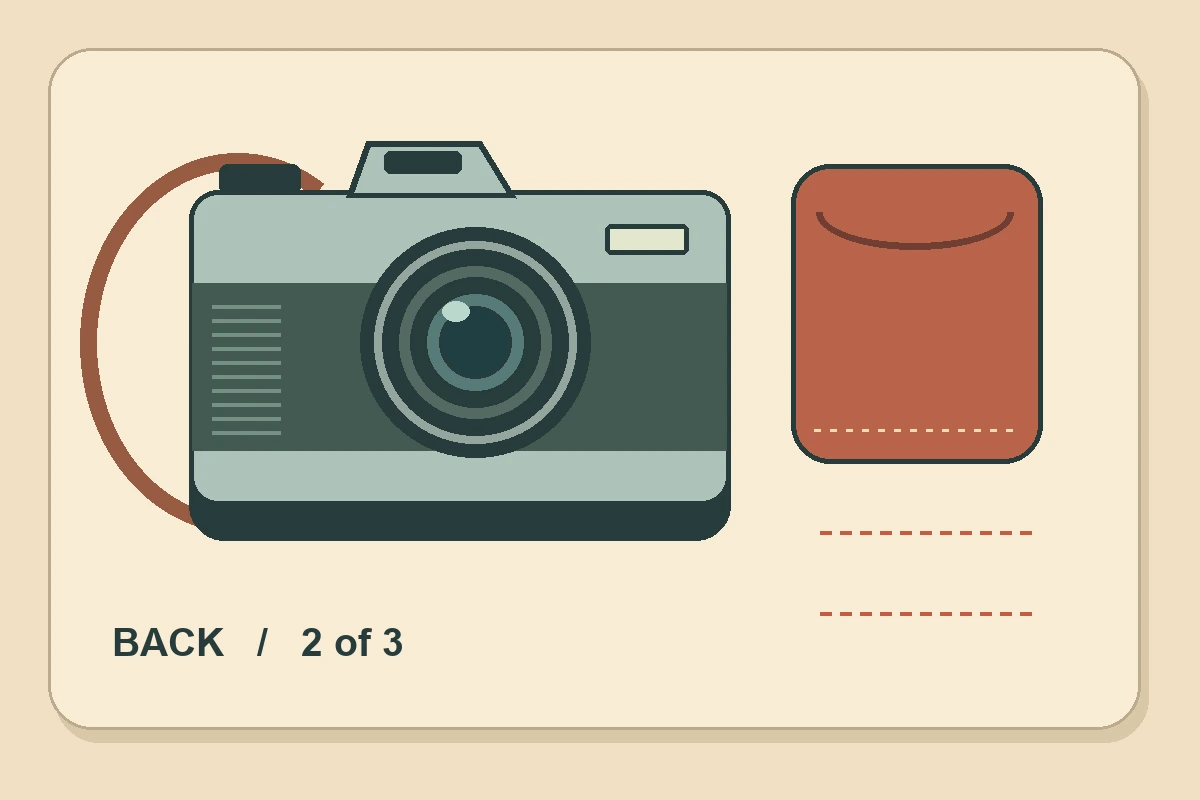
In this practice example, Jo took all three pieces on May 2. On May 8 you put the camera and sleeve away. The reader is still out. Here is what the slip would show that evening.
| Piece | Last confirmed | Next action |
|---|---|---|
| Camera | Back on shelf, May 8 (3) | Close this line. |
| Sleeve | Back on shelf, May 8 (3) | Close this line. |
| USB reader | Still with Jo (3) | Ask about it on May 9 (2). Return date unknown. |
I would use one line per piece if a missing accessory would stop the next person using the kit. A single paperback can have a single line. There is little to gain from recording its jacket unless you particularly want it returned.
Turn handwritten updates into a clean copy
If several people have added notes, type the relevant lines into an AI assistant. Initials are enough. Give it the dated observations, then compare each row with the slip before copying it back. For one short entry, writing directly on the slip is quicker.
Turn my numbered notes into a lending log. Make one row per piece. Include holder, last confirmed action, agreed return date and note number. Write “unknown” where a note is silent. Do not send reminders or invent a due date.
1. On May 2, Jo took my camera, sleeve and USB card reader.
2. We agreed to check in on May 9. We did not set a return date.
3. On May 8 I put the camera and sleeve back on my shelf. Jo still has the reader.
Copy the practice prompt. Check the reader row first. If it says “due May 9,” look at note 2 and correct the date field. The assistant can organize the notes you supplied. You or the borrower must still locate the reader. Leave its line open until someone confirms the handback.
For equipment that generally stays at home, use the cable inventory and labels. If two notes disagree about a return, check the summary against the original notes before changing the record.
When a second person collects the kit
Suppose Jo leaves the camera bag with Lee at work, and Lee offers to drop it off tomorrow. Keep the collection and the return as two separate entries. Write “Jo says Lee collected the bag, May 7.” Leave the contents open until someone checks them. If Lee counted the camera and sleeve at pickup, add that narrower observation with Lee’s name. You can now tell whom to ask about the bag without losing the trail for the reader.
Use the same approach when somebody leaves gear on your doorstep. A message saying “dropped it off” tells you where to look. Once you open the bag, mark the pieces you actually find. If a reader turns up loose in the side pocket a week later, add the date you found it. Keeping the earlier entry makes sense of the check-in you already sent.
Keep the open sheet where you store the item: for a camera, that might be the shelf where the bag normally sits. When the last piece comes back, cross off the follow-up date. If another friend borrows the same camera the next day, give that loan a fresh sheet so an old check mark cannot close a new loan by mistake.