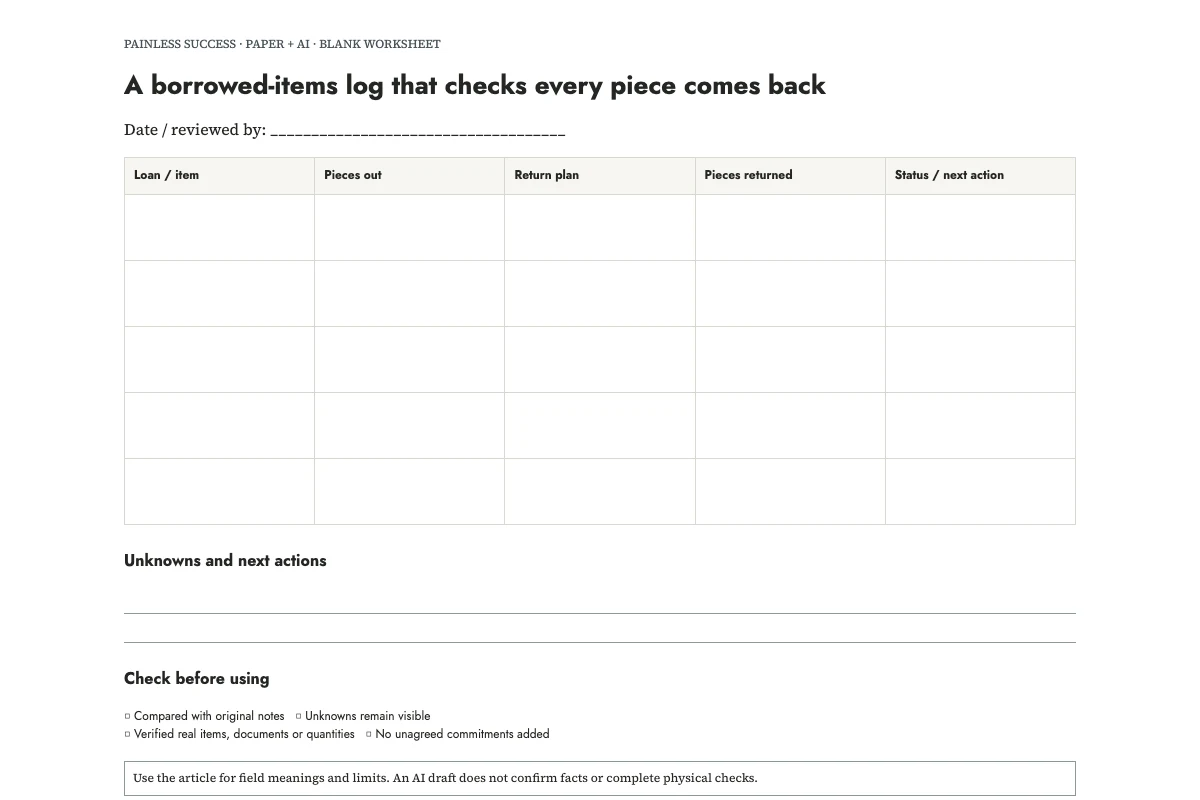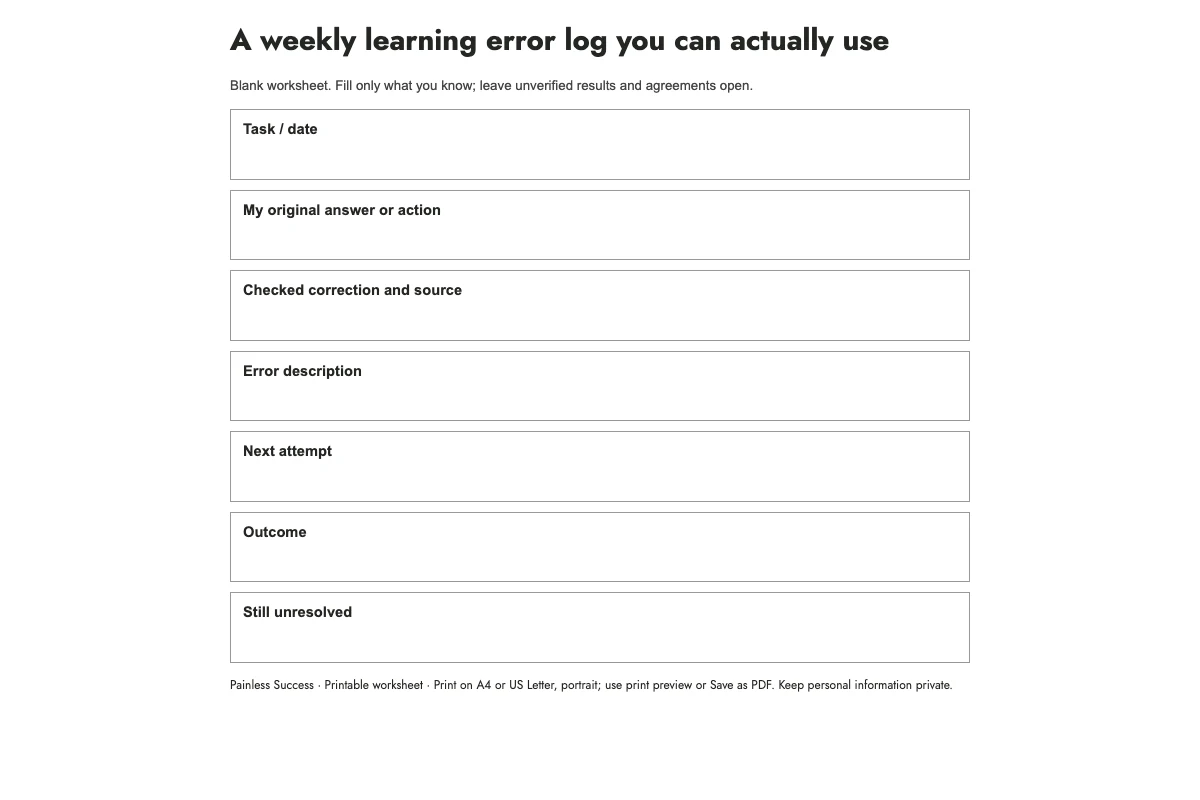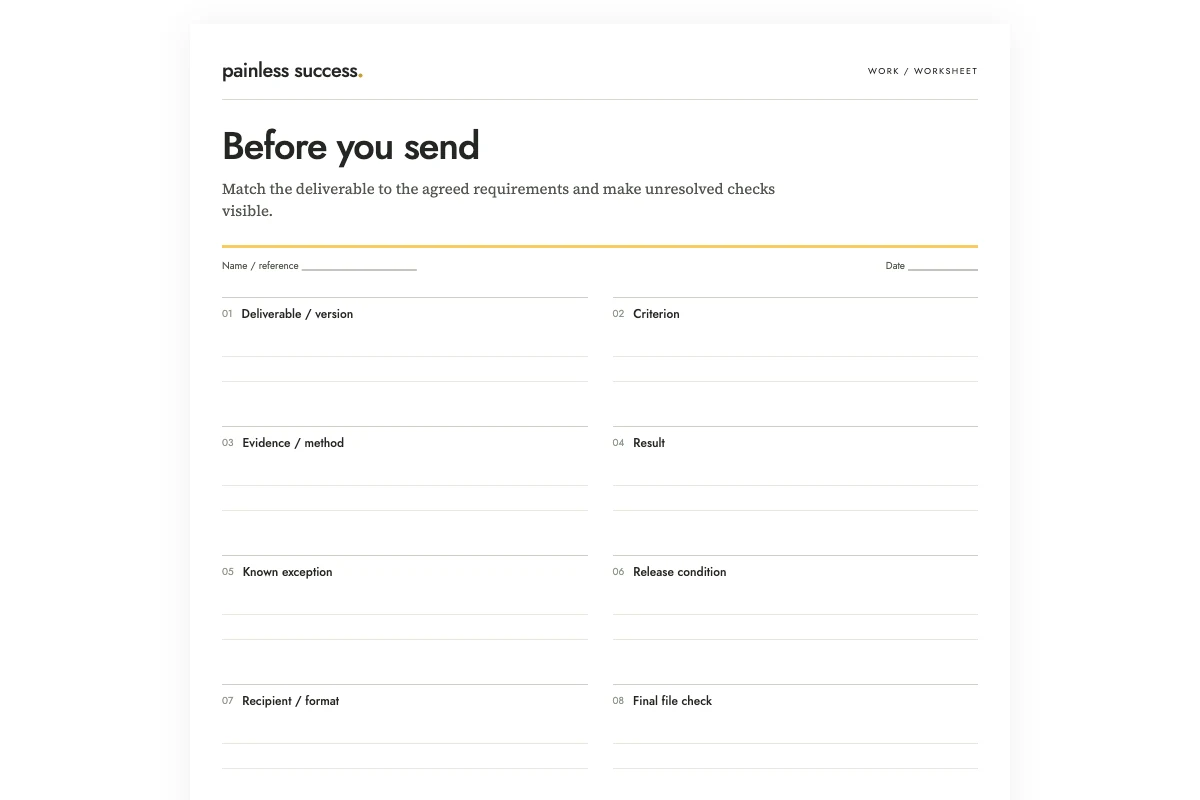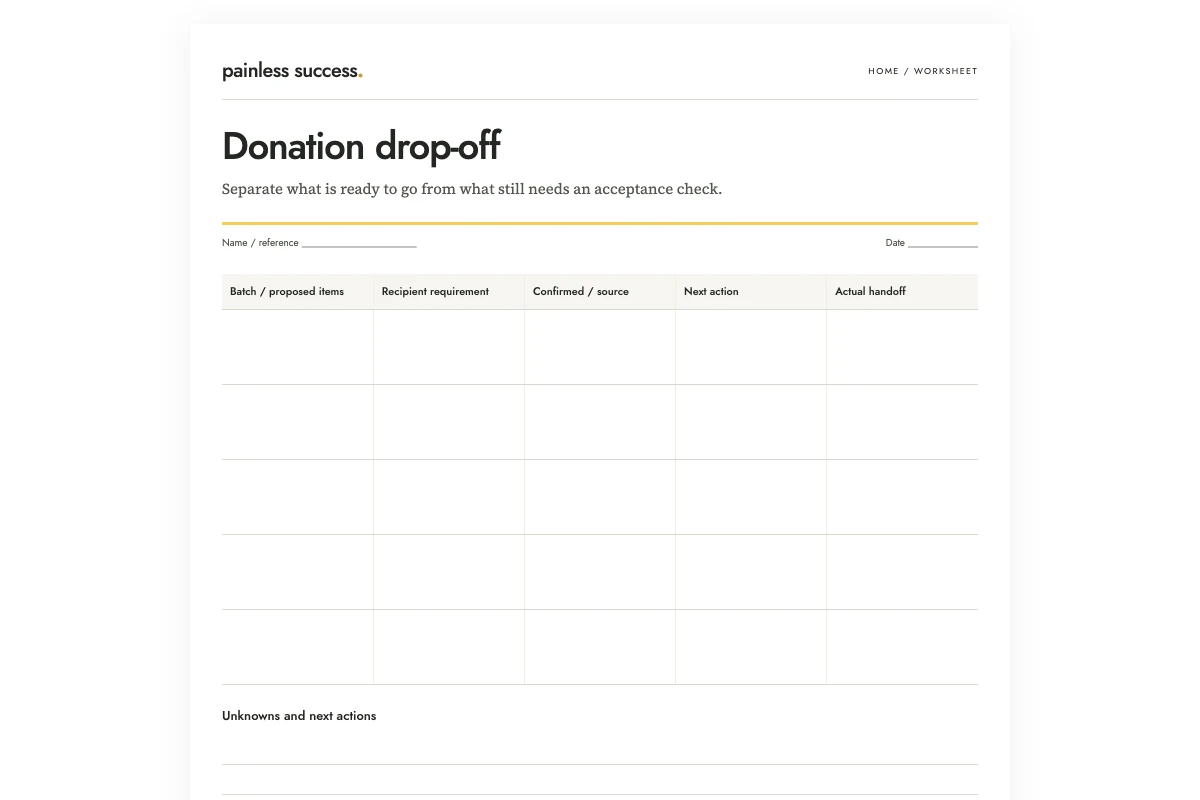
Before loading a donation box or arranging collection, check what the recipient has agreed to receive. Keep three parts of the record separate: the items you propose, the recipient's conditions and what you eventually hand over. That way, the log shows how far you have got without marking an unfinished donation complete.
Consider a fictional batch containing six novels and two empty binders. The recipient's invented reply says that complete, dry fiction books are accepted, and that a Saturday morning slot may be possible if arranged first. The reply says nothing about binders. The correct next actions are to check the books, ask about the binders and confirm a slot. “All eight items accepted; drop off Saturday” goes beyond the evidence.
Print the preparation log, read the filled example, and save the complete prompt. The example does not describe a real organization or establish any recipient's current policy.
Start with a short proposed batch
List the items and their quantities: six novels and two binders, for example. “Two bags of stuff” describes how you will carry them, but gives the recipient little basis for deciding whether it can accept the contents.
Keep the batch small enough to inspect. If you uncover more items while preparing it, add them as new proposals rather than assuming an earlier reply covers them. An acceptance message about books does not automatically apply to stationery, clothing or a newly added electrical item.
Use a batch ID if several trips or recipients are involved. D07 can remain the same while you change its proposed destination. That helps you avoid treating the same item as promised to two places. If you split a batch, name the resulting groups clearly and update the quantities.
Capture the recipient's actual requirements
Check the chosen recipient's current published instructions or ask through its normal channel. Record the source and date. A general article about charity donations cannot confirm whether this recipient will accept your items.
Copy the relevant conditions accurately, or summarize them without dropping a requirement. Put a condition about complete books beside the book row, and keep prior contact as a step if required. The recipient sets its own arrangements, so this worksheet cannot supply a universal acceptance list.
An unclear answer is a reason for a focused follow-up. “Does your reply also cover these two empty binders?” is easier to answer than “Can I bring everything?” Use the clarification guide when a reply leaves an important part of the request unresolved.
Check your items against those conditions
Work through the proposed batch using the recipient's criteria. Mark a check only after you have performed it. In the invented example, no book has yet been checked for completeness or condition. The fact that the recipient accepts certain books does not establish that these particular books meet its description.
Set aside items that fail the stated criteria or still need clarification. Keep them out of the accepted batch while you ask about a suitable route. The items already confirmed for this recipient can continue through preparation.
For items containing personal information, decide what must be removed before offering them. A notebook, folder or device may need more attention than its category suggests. This article does not provide device-erasure, disposal or safety procedures; keep such items pending until you have appropriate instructions for the actual object.
Turn the exchange into a preparation sheet
If the recipient's reply and your item list are hard to compare, ask AI to put them into matching fields while leaving gaps visible. Specify that an offered slot must stay separate from a confirmed arrangement. OpenAI's prompting guidance recommends specific requests and refinement after review.
Make a donation preparation log from this fictional exchange. Distinguish proposed items, recipient-stated criteria, checks completed by the donor, arrangements offered, arrangements confirmed, and actual handoff. Never infer acceptance from the word donation. Do not add tax values, receipts, legal conclusions, addresses or booking confirmations. Draft only; no contacting or booking.
N1: Proposed batch D07 contains six novels and two empty binders. No condition check has been recorded.
R1: Fictional recipient reply: We accept fiction books when complete and dry. The reply says nothing about binders.
R2: Fictional recipient reply: Saturday morning may be possible, but arrange a slot with us first. No exact date, address or slot is supplied.
N2: The donor has not arranged a slot and has not handed over anything.
Return a compact table, an unresolved list, and a draft question about the binders and an available slot. Keep the question separate from confirmed facts. Use source IDs.
The draft follow-up could say: “Thank you. Would you also accept two empty binders, and could we arrange an available Saturday morning slot?” That is a proposed message, not a request already sent. The model should not create a reply on the recipient's behalf or choose a time from the vague phrase Saturday morning.
Confirm the handoff before organizing the trip
Once you have an actual arrangement, record the relevant date, location or collection details in your private copy. Keep offered times separate from agreed times. If someone else will carry out the handoff, make sure they have the checked instructions rather than only a box marked donation.
Record a pickup as confirmed only when the recipient or collector agrees, and note which batch that agreement covers. If you change the items afterward, check whether the arrangement still applies before updating their acceptance status.
Do not infer paperwork, valuations or financial treatment from the handoff. The log records what was prepared and transferred. Any other documentation has its own requirements, which this organizational method does not determine.
Close the batch with what actually happened
After the handoff, record the actual date and the items the recipient took. If the novels were accepted but the binders stayed with you, close the book portion and keep a separate next action for the binders. “Donation done” would hide the remaining task.
OpenAI's accuracy guidance explains that generated responses may be inaccurate. Here the most useful review is checking acceptance words, quantities and scheduling states against the recipient's message. The filled worksheet is an invented teaching example, not evidence of a completed charitable transaction.
Use the household-admin finish line to decide where this session ends. You might stop once the accepted batch has been handed over and you have written the next action for the unresolved binders. Leave that outstanding decision visible in the log.
Sources and scope
The workflow and practice records were created for this article. OpenAI references support only the stated prompting and accuracy points. They do not establish measured benefits or validate the worksheet. Apply actual recipient, seller or manufacturer instructions where relevant; fictional examples establish none of those requirements.
More practical tools
Unstick a task or compare two options. Fill in your own details, then print the result or download your notes.