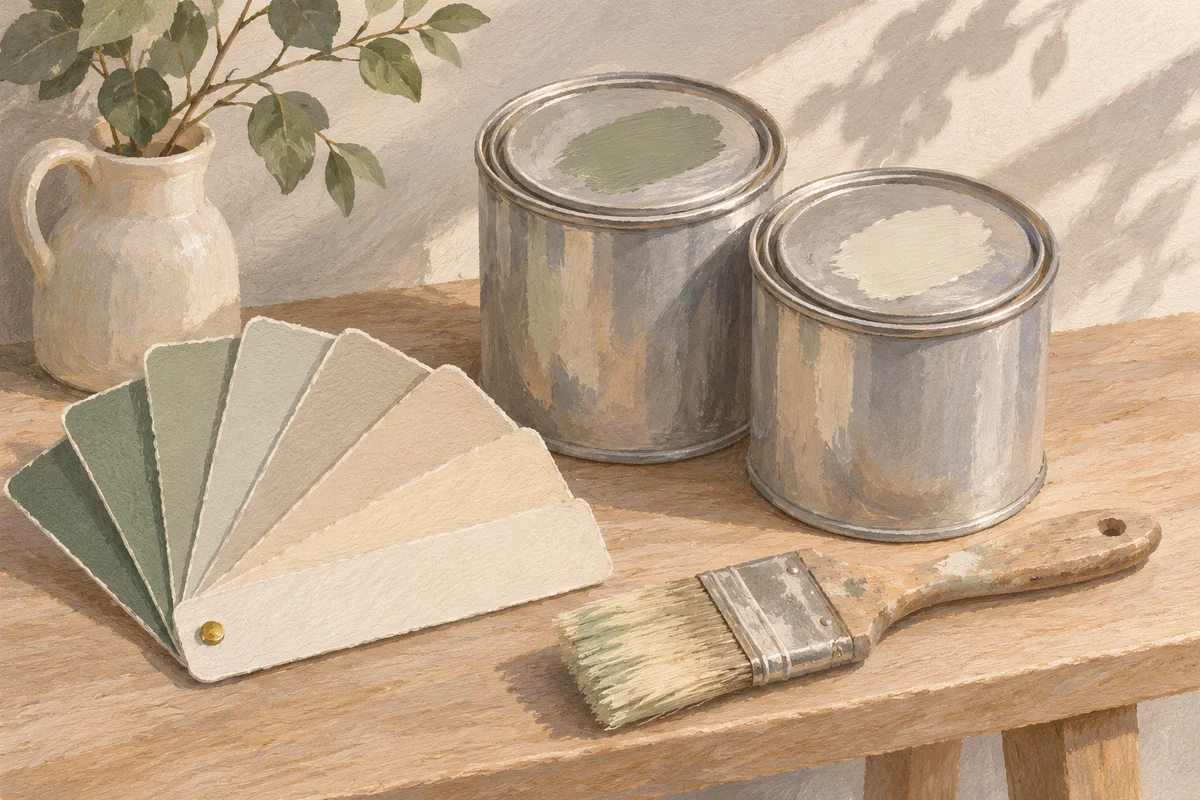
Two cans on the shelf both say P-04. One contains eggshell wall paint and the other contains satin trim paint. A notebook entry reading “hall, P-04” leaves you holding both cans when a chair scuffs the wall. Give the wall and the trim their own rows, then write down which can goes with each. The filled example below uses invented products and codes.
Print the A4 paint record or print the US Letter version. Each has a filled example and a blank sheet you can save as a PDF. Gather a pen, the cans you can identify, and any dated decorating notes or receipts. You can do the whole job on paper.
1. Name the surface while standing in the room
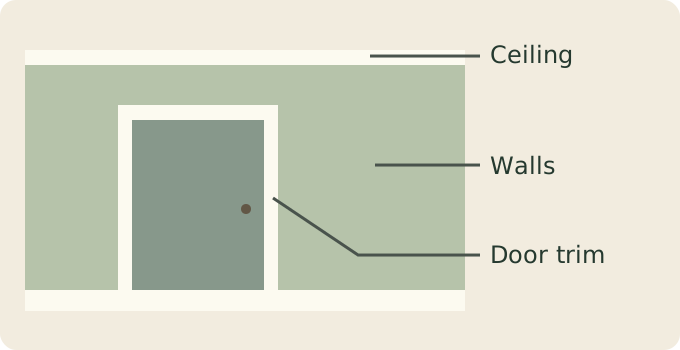
Pick a room where you expect to do a touch-up. Write what you can point to: “hall walls by the stairs” or “inside face of the hall door”. If an accent wall differs from the other three, give it a row. Keep the ceiling separate even if the wall and ceiling look much the same from the floor. Leave a space for the date a surface was last painted, if you know it.
2. Give each can an ID and copy its label
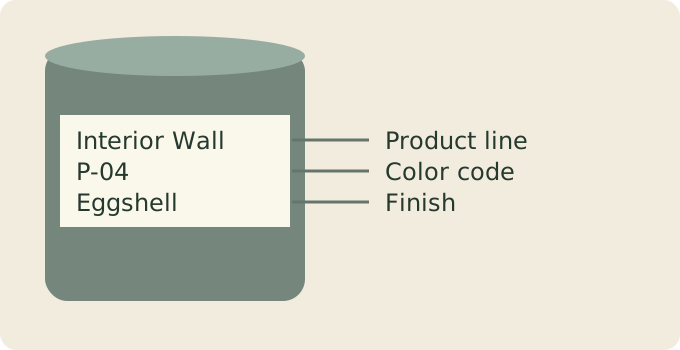
Use a short mark like A or B on a piece of tape. Place it where it leaves the original product and tint labels readable. Copy the manufacturer, product line, color name or code, and sheen exactly as printed. Add where you found the can. If the tint sticker and the front label carry different details, keep both. A receipt can identify what someone bought without telling you where they used it.
Benjamin Moore’s touch-up guide explains why finish and surface texture matter alongside color. If the label has rubbed off, write down the parts you can still read. A phone picture can preserve lettering for later inspection. The apparent shade on the screen gives you little to go on when two cans carry the same color in different finishes.
3. Connect the can to the job
Here the original paper job note says “A on hall walls”. The tape on can B says “hall?” with a question mark. Both labels show P-04. Only the wall entry has a recorded link to the surface. You can transcribe the whole label from B while leaving its destination open.
| Surface | Can and label | Evidence and next step |
|---|---|---|
| Hall walls | A · Interior Wall · P-04 · eggshell | Job note names A and walls. Record as linked. |
| Hall door trim | B · Interior Trim · P-04 · satin | Can says “hall?” only. Check the original job note. |
| Hall ceiling | Unknown | No can or note. Leave open. |
I would leave the trim row open until you can find a dated job sheet or ask the person who painted it. If you painted it yourself today, recording the can ID as you finish takes care of that question straight away. For an older room, a blank field is useful: it tells the next person exactly what they still have to check.
4. Turn paper notes into a draft you can check
If you have several rooms, type the label details and job notes into this prompt. Include the question mark on can B. Omit addresses, contact details and payment information from receipts. The assistant can sort the text you give it. It has no view of your shelf or independent evidence about who painted a particular surface.
Organize my typed paint notes into one row per room and surface. Copy product names, codes and sheens exactly. Include the can ID and the note that connects it to that surface. Mark a missing field “unknown” and conflicting details “check”. Do not identify colors from a photo, guess a product, or recommend a purchase. Return unresolved questions separately.
Can notes:
Room and surface notes:
Dated changes:
Download the plain-text prompt. Read the answer with the original notes beside it. Look first at repeated codes and unfinished rows. If the draft assigns B to the hall trim because its label says satin, put the question back. If it drops a leading zero from a color code, copy the label again before filing the sheet.
5. File the record where you will look for the paint
Write the shelf or cupboard on the room sheet and keep a copy with your decorating notes. When you repaint just the doors, date a new door entry. The wall entry can keep its earlier date. Before buying paint for a repair, take the relevant row and label details with you. An old record identifies what was used at the time. A touch-up may still look different on the wall, especially if the finish or application texture differs.
For another pair of eyes on a transcription, use the source-note review worksheet. For quantities of supplies you replace regularly, use the household stock sheet.